
Excel Cell-Level Permissions Panel
A salesperson may need to edit quantity, while warehouse staff confirm delivery and a manager maintains unit price.
How the Excel Cell-Level Permissions Panel can work
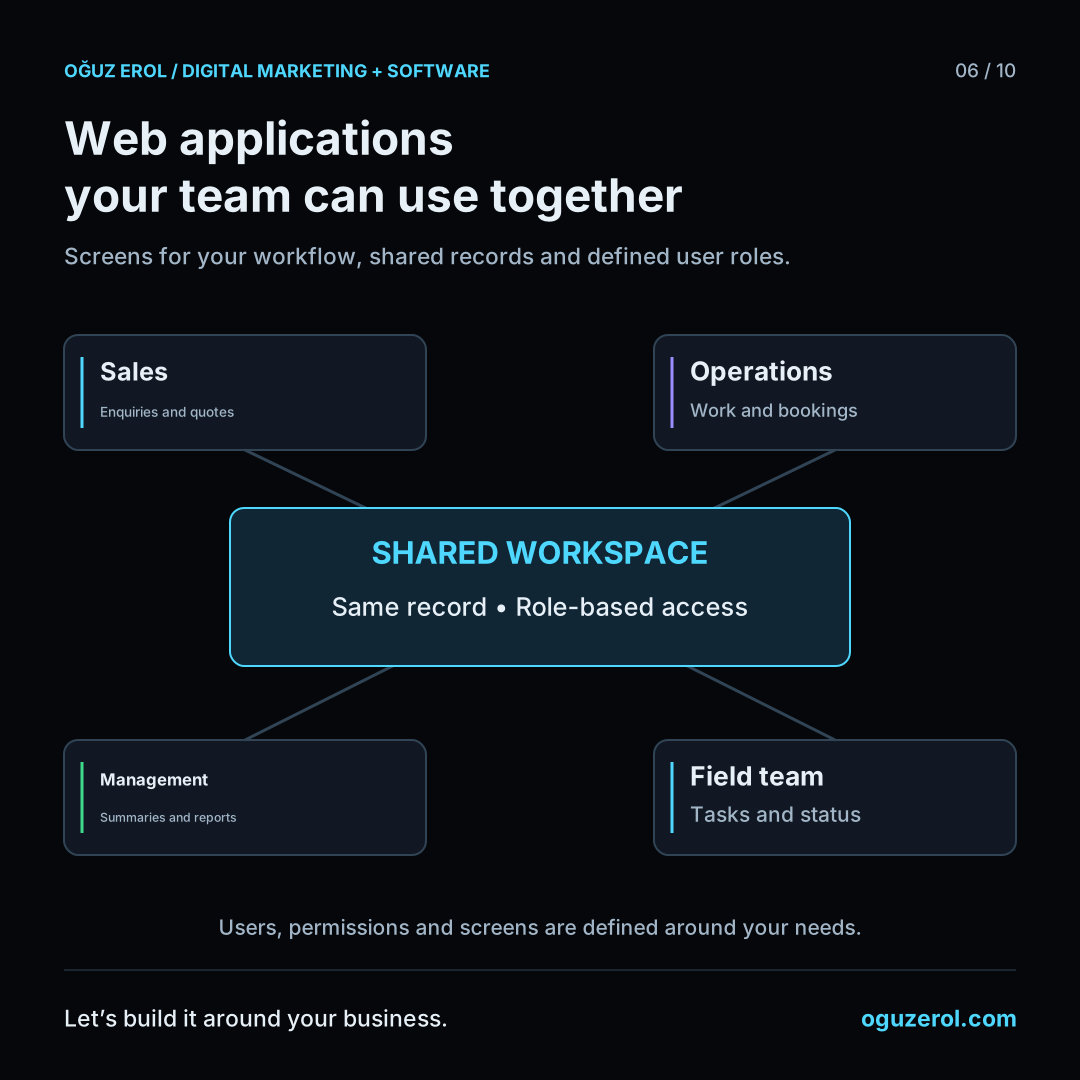
I can turn that division into a role-based form instead of a shared workbook. The interface can show each role only the fields needed for its task; read-only values remain visible where they help the work continue.
Excel cell protection can be a starting point, and Google Sheets offers co-editing and validation. For a split where sales enters quantities and warehouse records delivery, application-level field permissions are clearer.
As Oğuz Erol, I develop custom web apps for this workflow. After reviewing the columns and the three roles’ action boundaries, I aim to prepare an initial working screen quickly; scope and timeline follow that review.
Frequently Asked Questions
What replaces cell-level permissions?
The form exposes the fields and context needed for the task. Values such as price can be editable only for the appropriate role.
Must someone who sees price also edit delivery quantities?
No. Viewing and editing rights can be separated for each part of the workflow.
Discuss your workflow
Explore custom web apps for your team
Related services
How do I work?
Work-hour packages
Tell me about your website and what you need on WhatsApp or by phone; we agree on a work block of somewhere between 5 and 40 hours and I start doing what is needed. What you get is not a calendar window — it is net working hours spent directly on your business. I can use 40 hours working three days straight, or deliberately spread it out and finish it over a year — whatever the work calls for. I do not spend my time estimating how long something will take, I spend it doing the work; every hour I spend has a lasting result on your site. We keep going for as long as you find it useful.
Why not monthly?
Is 40 hours a week?
On a fixed monthly fee both sides are watching the wrong thing: you watch a fixed cost, the other side watches how many more contracts like this they can line up. Working by the hour puts us both in front of the same thing — the real value of the work that got done. I know not having an upfront answer to "how much will this cost in total?" is the natural cost of this model. But instead of paying a fixed fee for months to a setup that is not producing results, you only pay for the qualified time spent on your work — and you see exactly where that time went, start to finish. That is why my clients keep coming back.