
Bring Business Data from Different Files into One Dashboard
Checking the business each morning may mean opening an order file, an expense sheet and a team list separately. I can combine those sources in an Excel or Google Sheets dashboard. If your team needs role-specific views and access, I can also develop a custom web panel using the same data.
Choose measures that support a decision
We start with the questions the panel should answer. Pending orders, completed work and period expenses may come from different sources. Each measure has a clear definition and source. Last-update times stay visible, and an unavailable source is not presented as a zero result. Management can move from a summary to the underlying records. Real-time updates depend on the access and limits of the source systems.
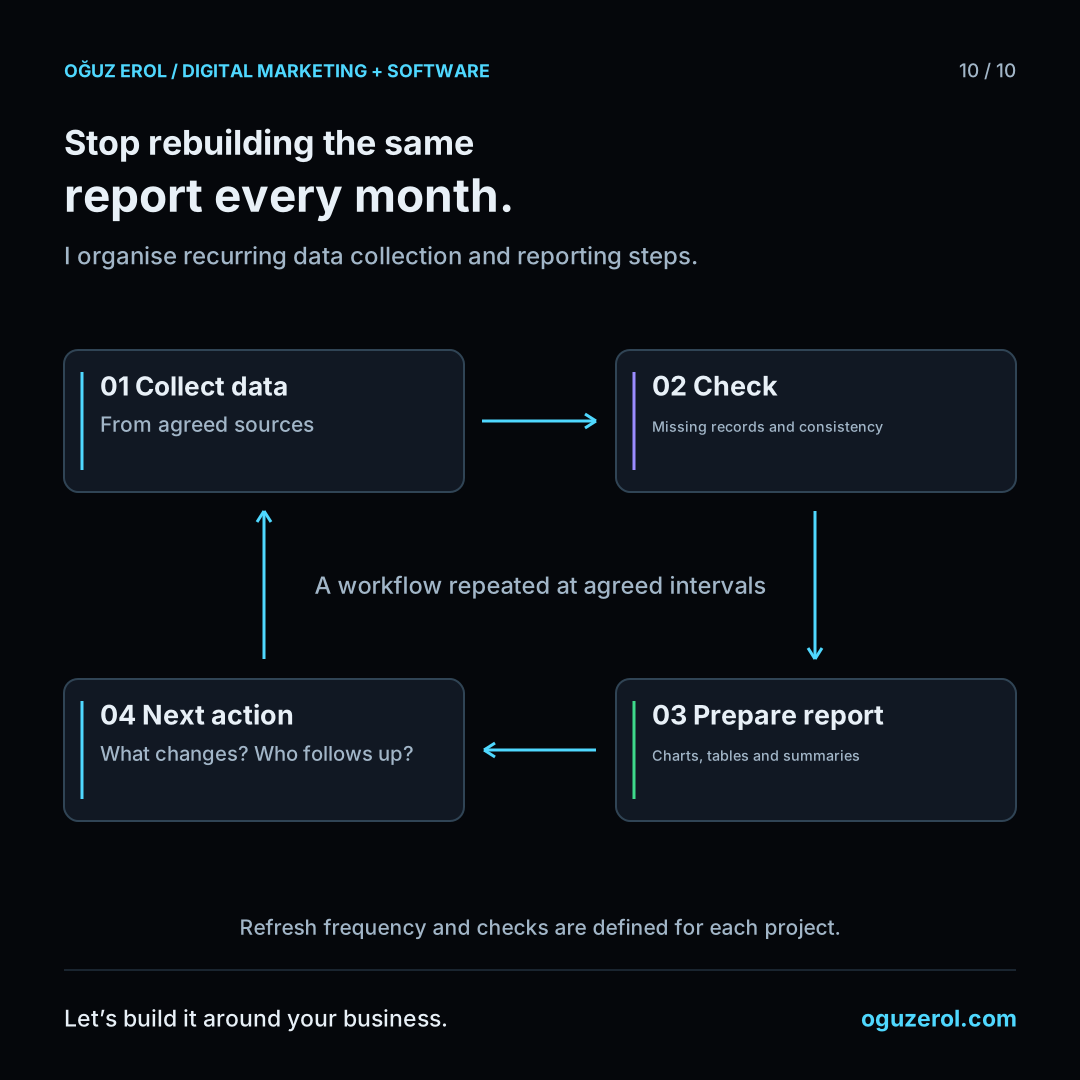
Choose a spreadsheet dashboard or a separate app
A spreadsheet dashboard may be enough for a few shared measures. A custom app is useful when visibility differs by user, separate entry screens are needed or source health must be tracked. A small set of measures and sample data provide a first version to try quickly. We reconcile calculations with source totals before adding connections. Manual file imports and scheduled API access require different scopes.
Frequently Asked Questions
Can you build a dashboard in Excel or Google Sheets?
Yes. I can build a dashboard in your existing Excel or Google Sheets setup. A separate web app is another delivery option chosen to suit your needs.
What happens if one source stops working?
Sources can be monitored separately. The last received value keeps its date and error status, with warnings to avoid treating old data as current.
Discuss your workflow
Describe your workflow on the contact page. Explore other examples of custom web apps for your team.
Related services
How do I work?
Work-hour packages
Tell me about your website and what you need on WhatsApp or by phone; we agree on a work block of somewhere between 5 and 40 hours and I start doing what is needed. What you get is not a calendar window — it is net working hours spent directly on your business. I can use 40 hours working three days straight, or deliberately spread it out and finish it over a year — whatever the work calls for. I do not spend my time estimating how long something will take, I spend it doing the work; every hour I spend has a lasting result on your site. We keep going for as long as you find it useful.
Why not monthly?
Is 40 hours a week?
On a fixed monthly fee both sides are watching the wrong thing: you watch a fixed cost, the other side watches how many more contracts like this they can line up. Working by the hour puts us both in front of the same thing — the real value of the work that got done. I know not having an upfront answer to "how much will this cost in total?" is the natural cost of this model. But instead of paying a fixed fee for months to a setup that is not producing results, you only pay for the qualified time spent on your work — and you see exactly where that time went, start to finish. That is why my clients keep coming back.