
ADHD Didn't Change. The Tools Did: A Scattered Brain and an AI Agent
On YouTube
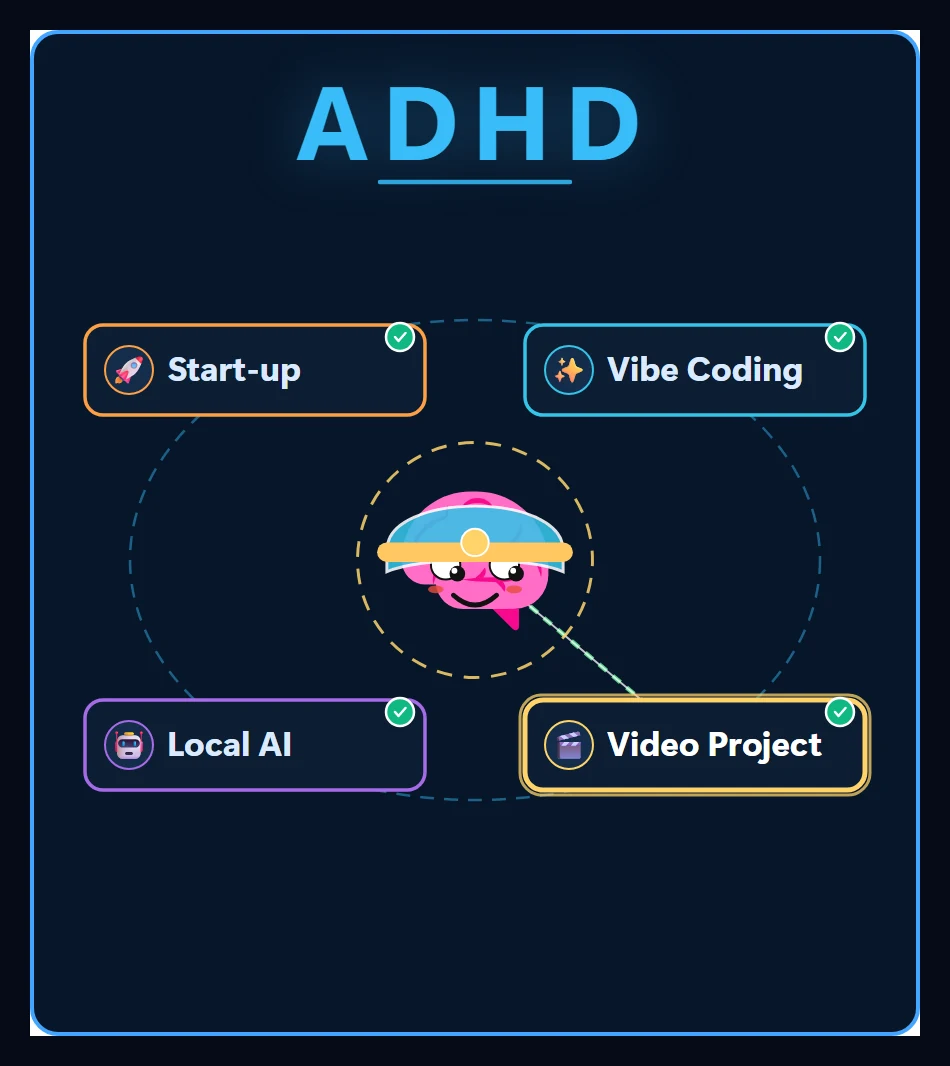
ADHD didn't change. The tools did.
Isn't using an AI agent hard for someone with attention deficit hyperactivity disorder (ADHD)?
Full description
I think it's the exact opposite: a golden age is starting for this kind of brain, and precisely because of the part everyone called a flaw.
Scattering used to have a brutal price tag. Every return meant rebuilding everything in your head, and that cognitive overhead punished anyone who scattered. Now, the agent holds the context. You ask where we left off, and you continue instantly — even on a project abandoned months ago.
In this video:
- An abandoned project is no longer dead; a closed folder isn't really closed.
- You don't wait while the agent works: like a grandmaster playing twenty chess boards at once, each board holds its own state.
- The blank page is gone: the agent takes the first step, and you steer.
- This brain doesn't run on distant rewards; it moves when it sees working results in minutes.
- An agent is a scattered engine too — bounded tasks, external memory, short loops, and unskippable checks keep it reliable.
- Not a treatment, but a way of working. Diagnosis and treatment belong to professionals.
My brain never changed. The tools finally caught up to it.
Working with an AI agent isn’t hard for someone with attention deficit hyperactivity disorder (ADHD); if anything, a new era is starting for this kind of brain. Not because the brain changed, but because scattering got cheaper: every return used to mean rebuilding the whole job in your head, and now the agent holds the context. An abandoned project isn’t dead, seven or eight jobs run at once, and the blank page stops being a wall. This is not a treatment but a way of working; diagnosis and treatment belong to professionals. For what an agent actually is, see What Is an AI Agent; the full map is in the Agentic AI Guide.
A scattered brain, new tools
The common assumption is that managing an AI agent is twice as hard for someone whose focus drifts easily. What I’ve seen is the opposite. The part of this brain everyone calls a flaw — jumping between jobs, caring about many things at once — stops being an obstacle when you work with agents.
The old cost of scattering
Why wasn’t scattering an advantage before? Because every return came with a bill. Coming back to a job after two weeks meant rebuilding the whole structure in your head: where was I, what had I tried, what came next.
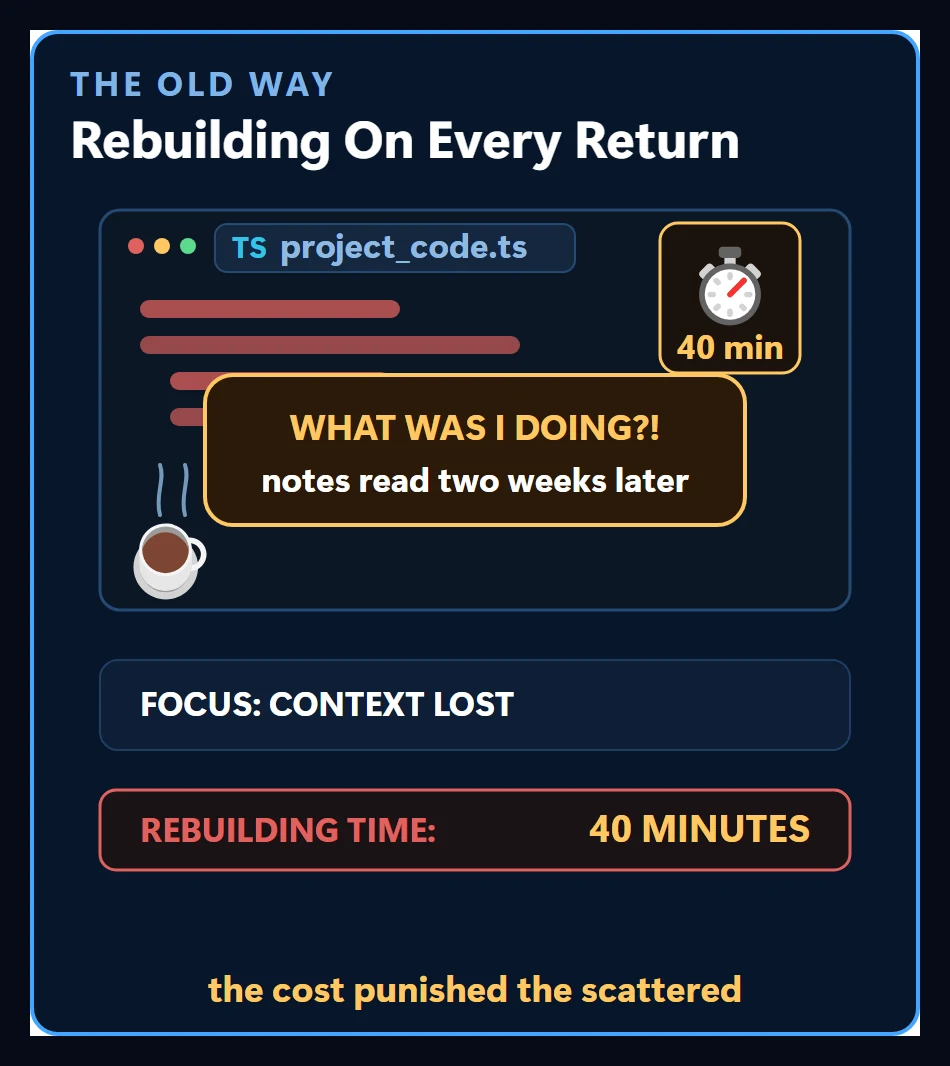
That cost punished the scattered. The same person could generate more ideas than someone who held one focus, and still finish less, because of what it took to come back.
The agent holds the context now
This is exactly what changed. You ask “where did we leave off?” and the agent tells you where you stopped, what was tried and what comes next. The context lives in a file outside your head.
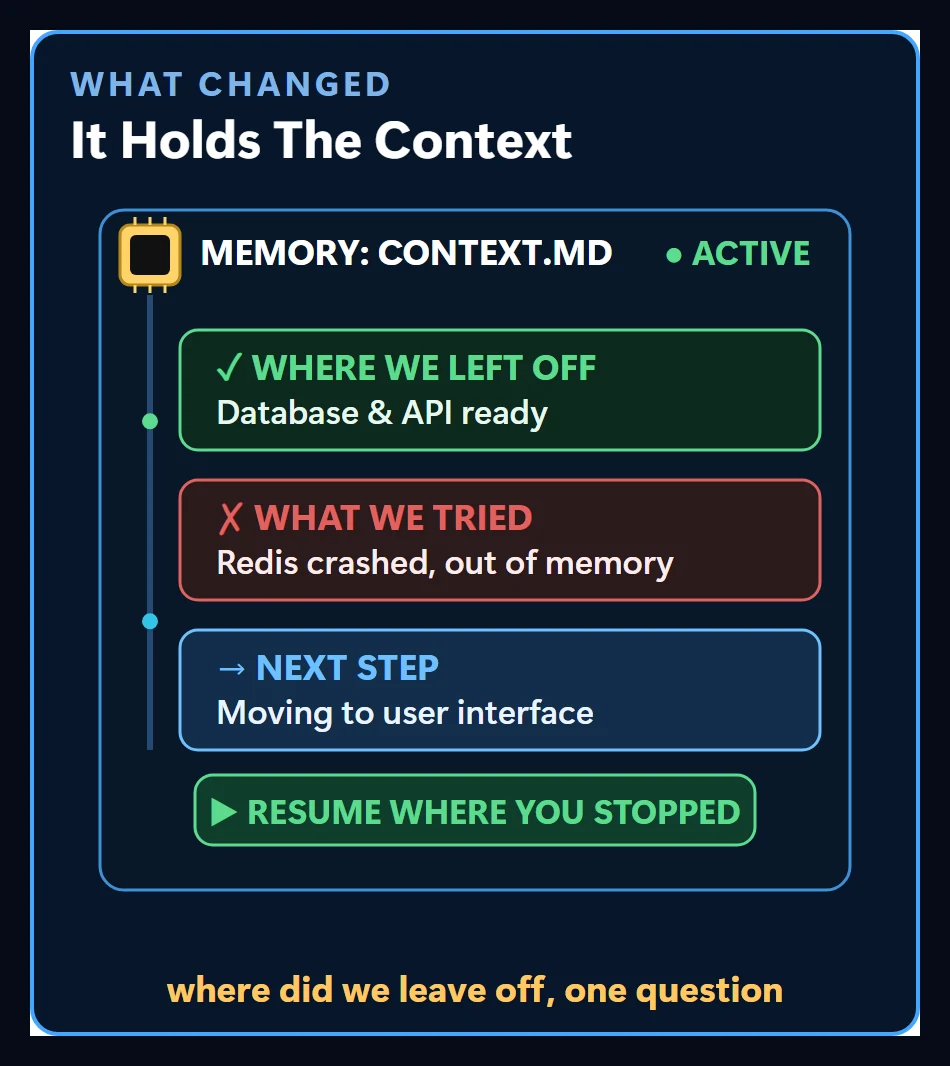
If you are someone who looks at your own notes two weeks later and understands nothing, this is where you feel the difference most. The burden of remembering isn’t yours.
A closed folder isn’t dead
You can return to something you dropped months ago. An abandoned project used to count as dead, because the memory it needed to come back to life was long gone.
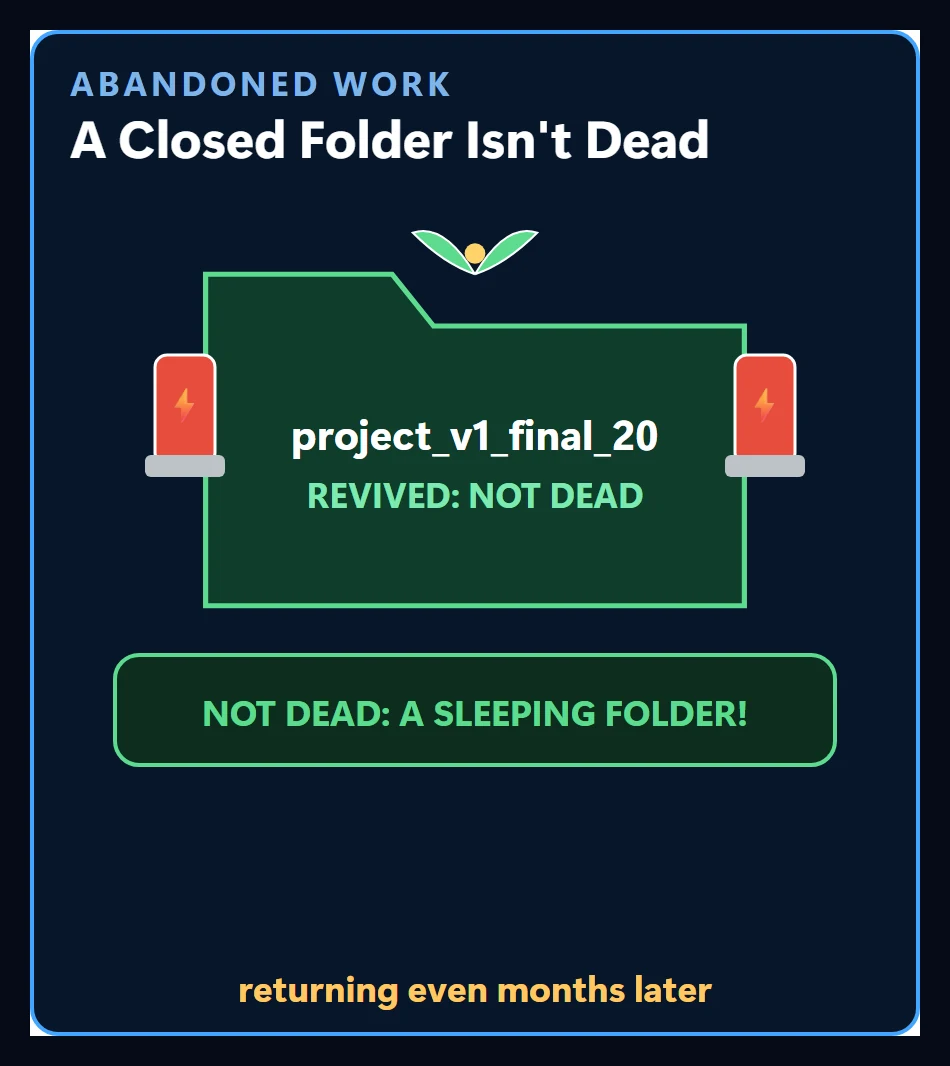
Now a closed folder isn’t really closed; it’s asleep. As long as the context record is there, the work opens where it stopped.
The waiting gap goes to another job
“When I look at two things at once I ruin both” used to be a fair objection. Now, while the agent runs one job, you don’t wait; you move to the other one in that gap.
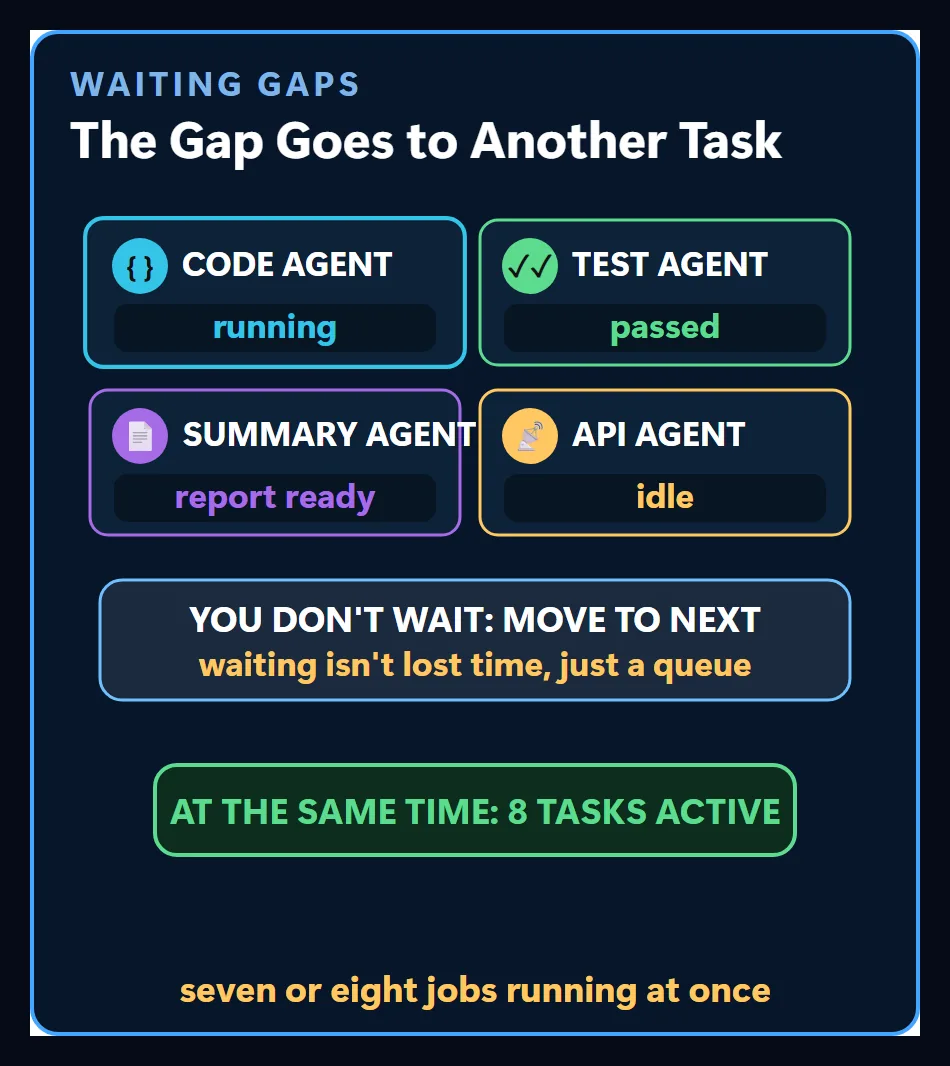
Seven or eight jobs can run at once, because each one moves on the agent’s loop rather than on your attention.
Not chaos — chess
Seven or eight jobs sounds like chaos. The better picture is a grandmaster playing twenty boards at once. The master doesn’t memorize every board; the board itself holds the position, and the master just makes the move.
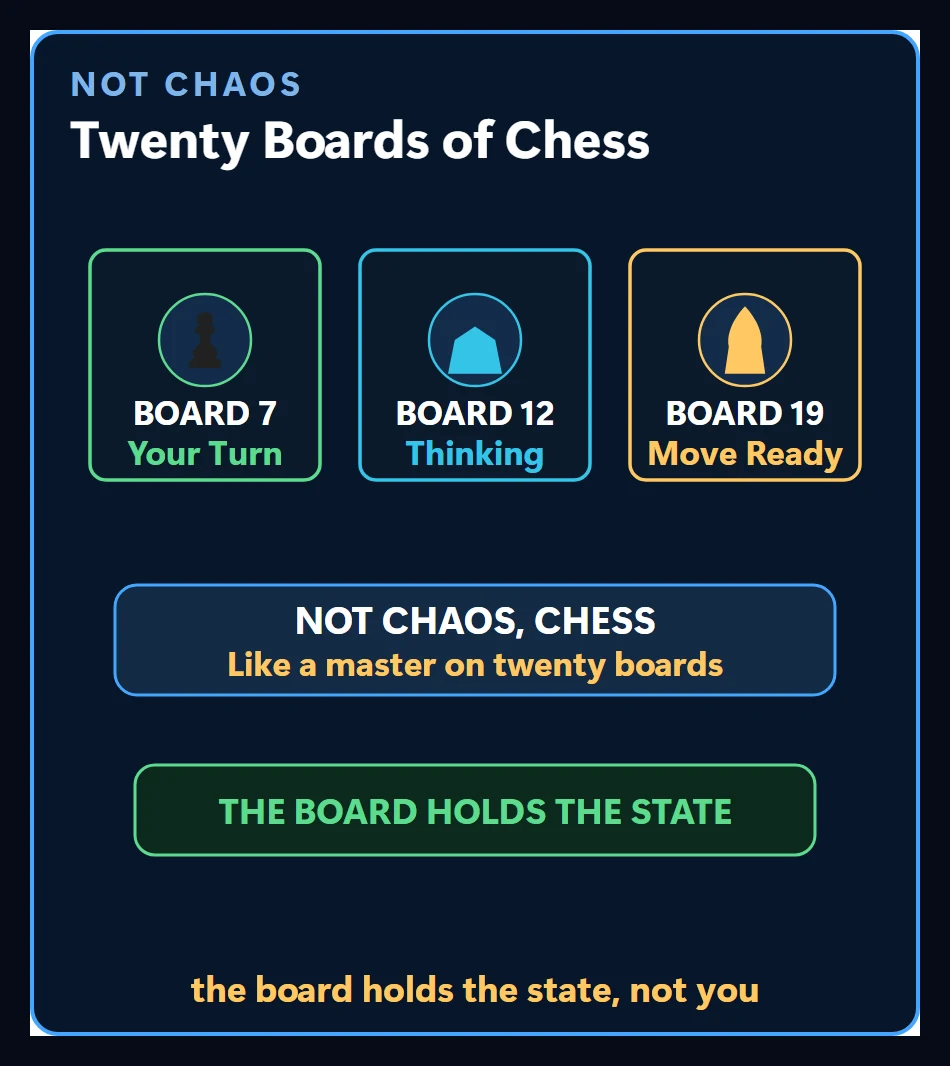
Working with agents feels the same: each job’s state sits in its own record, and you make your move on whichever one is up.
The blank-page wall is gone
In this brain, work usually jams at the same spot: the idea is there, the first step isn’t. Waiting in front of a blank page is more tiring than the work itself.
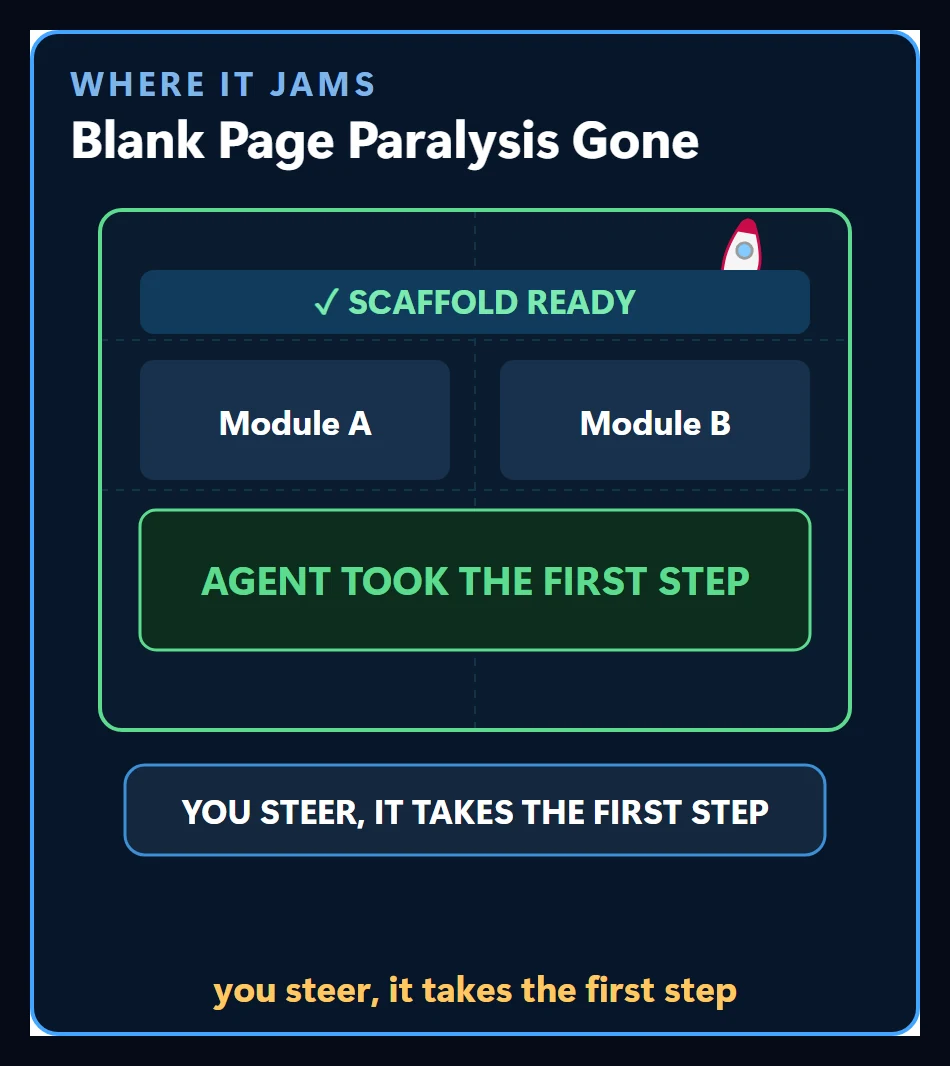
Now you state the idea, the agent takes the first step, and you steer. What’s in front of you is no longer a blank page but a draft to fix — and fixing is far easier than starting.
What drains you goes to it
You could argue that generating ideas is the easy part and the agent does the hard part. For this brain it’s the reverse. Generating ideas, making connections, saying “what if we tried this” stays with you; the repetition and detail that drain you go to the agent.
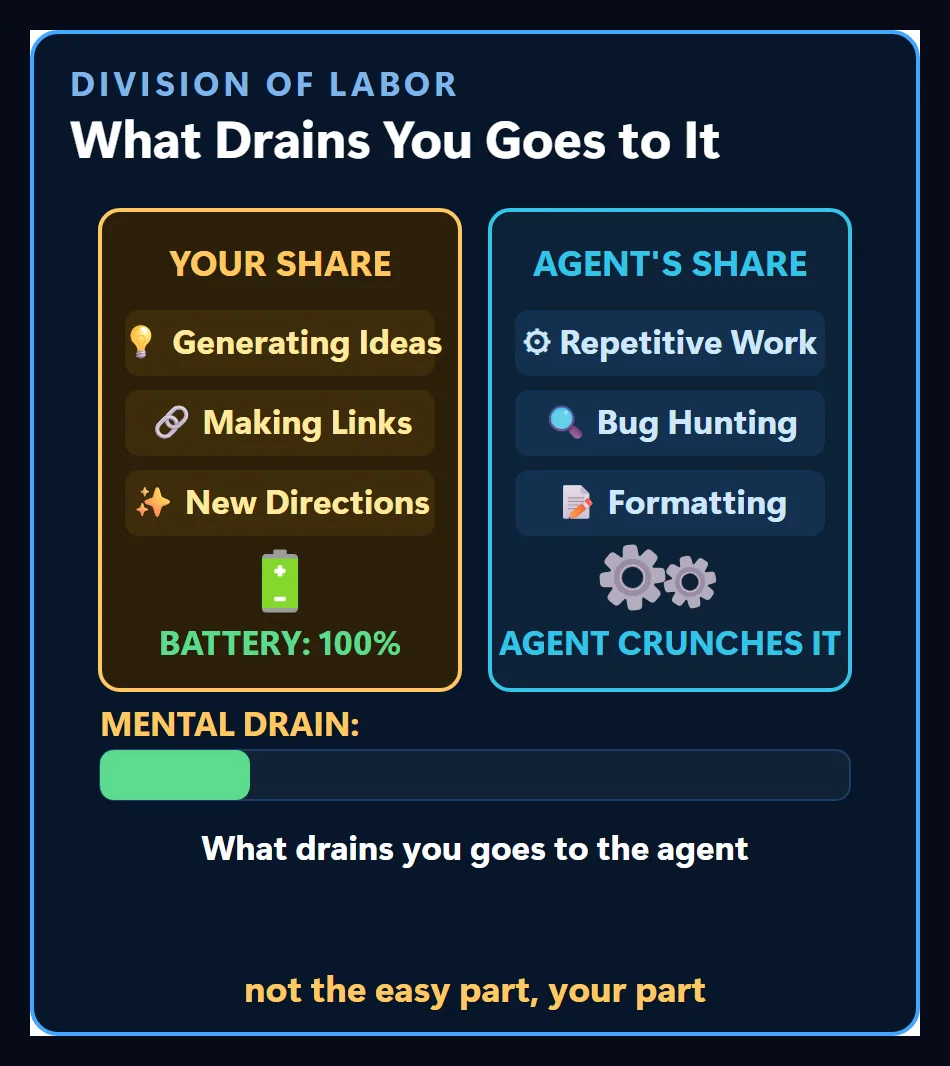
This isn’t handing off the easy part; it’s handing off the part that burns your energy. What’s left is exactly where you are strong.
Not interest, loop length
It looks strange that someone who can play games for twelve hours can’t stand half an hour of work. It isn’t strange: the problem isn’t a lack of interest, it’s how far away the reward is.
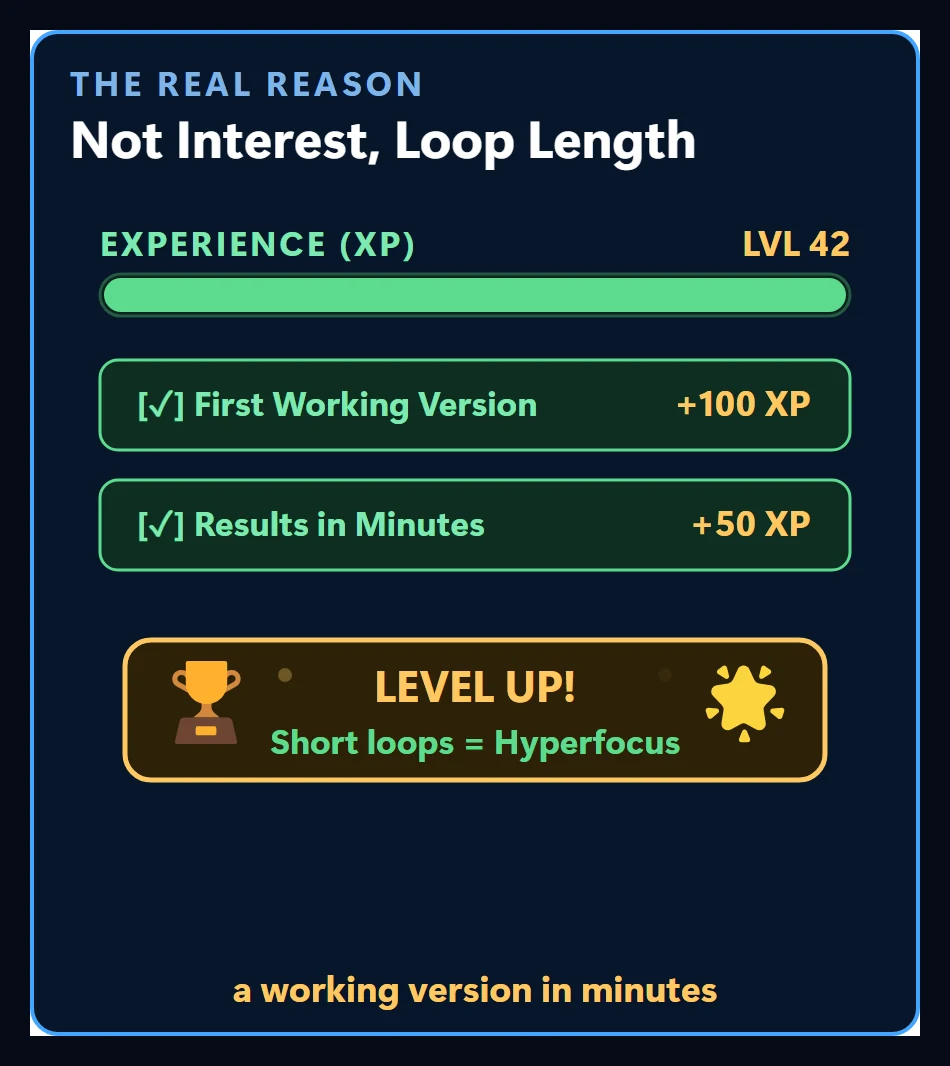
This brain doesn’t run on distant rewards; it keeps going once it sees a working version within minutes. Agents shrink the loop to exactly that size: you say something, and you see a working result soon after.
An agent is a scattered engine too
The setup I build around agents may sound familiar. That’s because an agent is a scattered engine as well: left alone, it drifts off topic, loses context and skips steps.
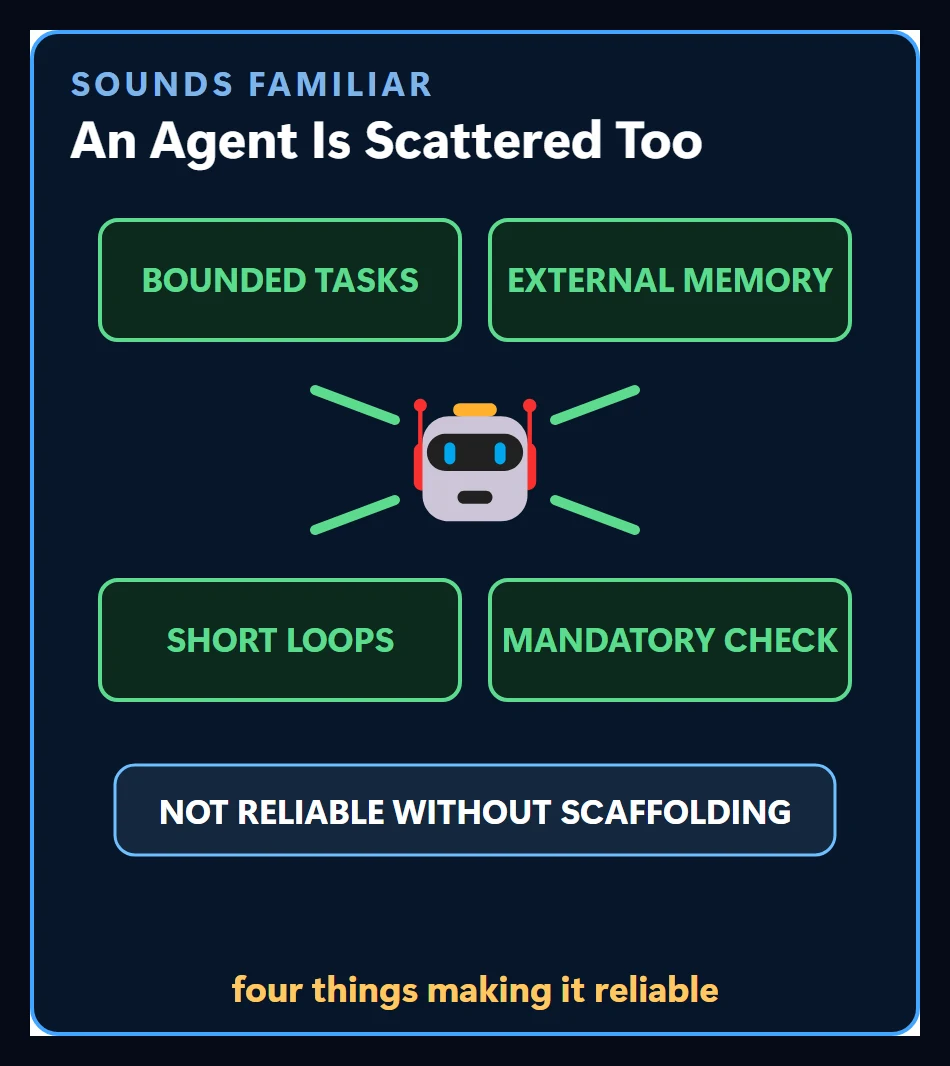
Four things make it reliable: a bounded task, external memory, a short loop and a check it can’t skip. I cover how to give an agent a good task in Briefing an AI Agent.
The same scaffolding for both
Here is the thing that stands out: the scaffolding that makes an agent reliable and the scaffolding that makes this brain reliable are the same scaffolding. Bounded work, memory kept outside, fast feedback, checks that don’t get skipped.
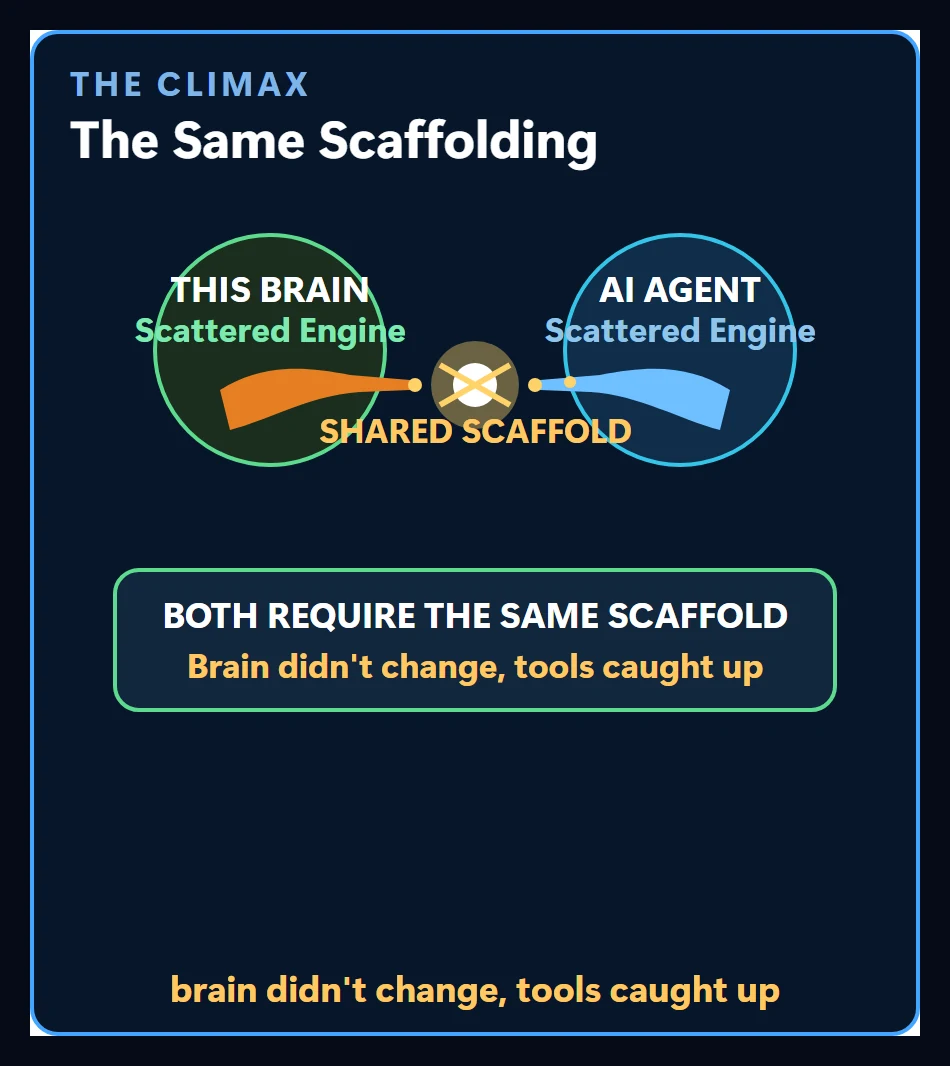
The brain never changed. The tools finally caught up to it.
An honest warning: the same flow removes the brakes
If this sounds too good, you’re right — there’s a cost. The same flow that pulls you into the work can keep you up until 3 a.m., and pulling yourself together the next day gets harder.
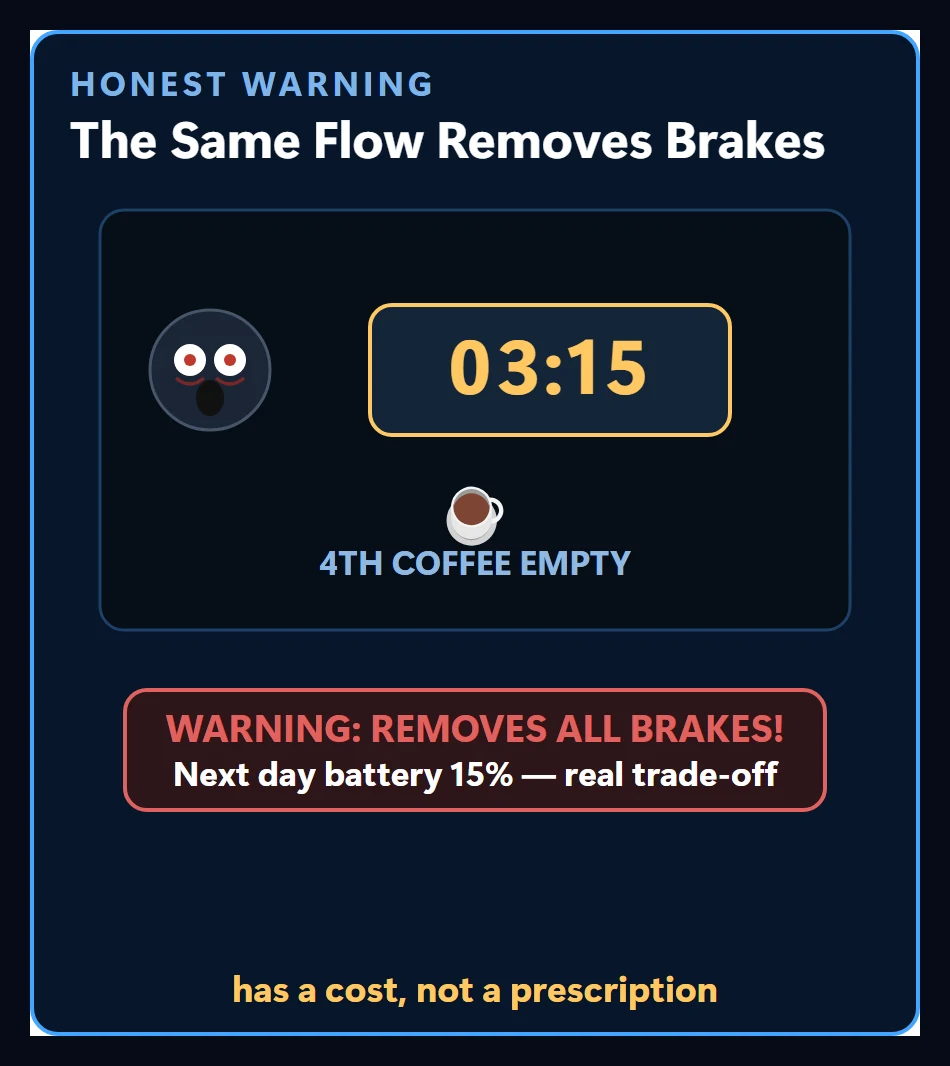
I’m not writing this as a prescription; knowing the cost exists is enough.
Not free, but a good trade
So it isn’t free. But compare the trade and the picture is clear: you used to never start; now you start, and some things actually get finished.

None of the ideas get thrown away
For someone with forty-seven ideas, this is what changed most: forty-seven ideas used to add up to zero projects. Each one stalled halfway and never reopened, because coming back cost too much.
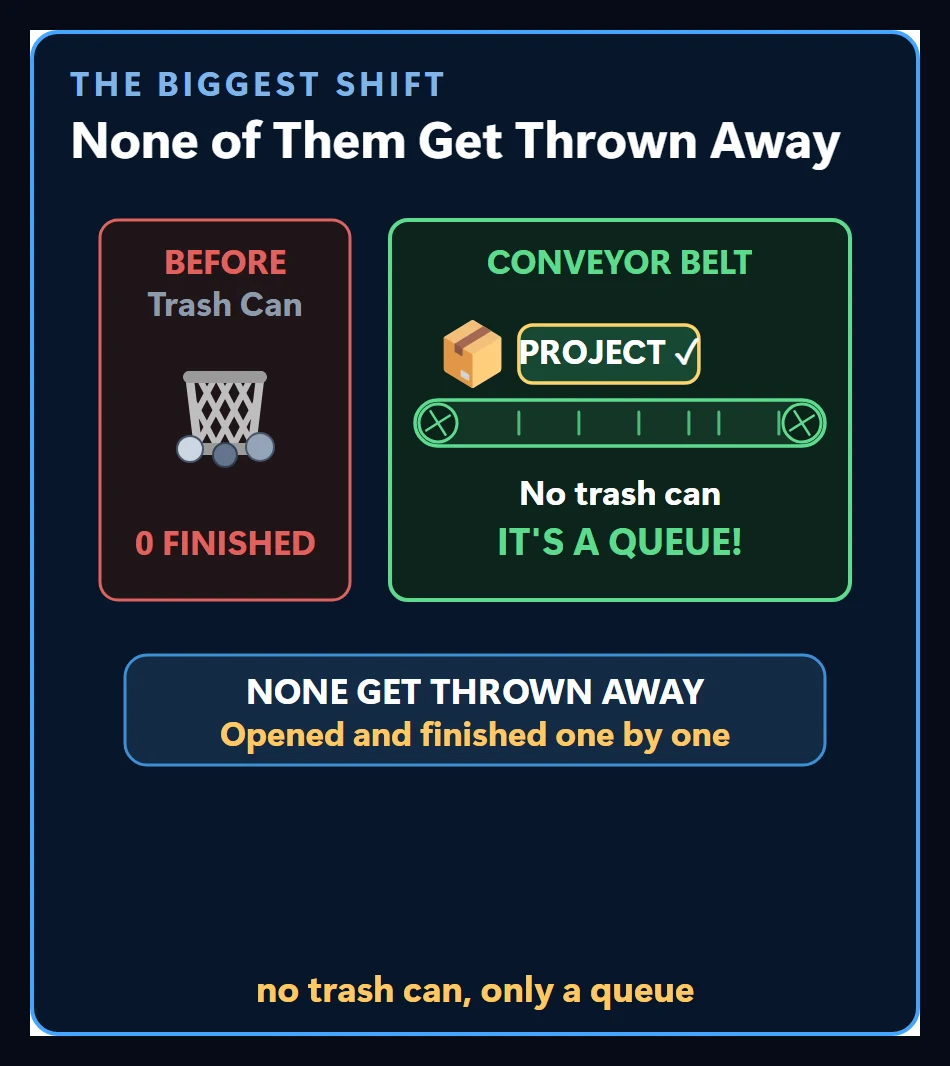
Now you throw none of them away; you open them in turn and keep going. No trash can, only a queue.
A way of working, not a treatment
Some people describe this as a treatment. It isn’t. What I’m describing is a way of working; diagnosis and treatment belong to professionals.
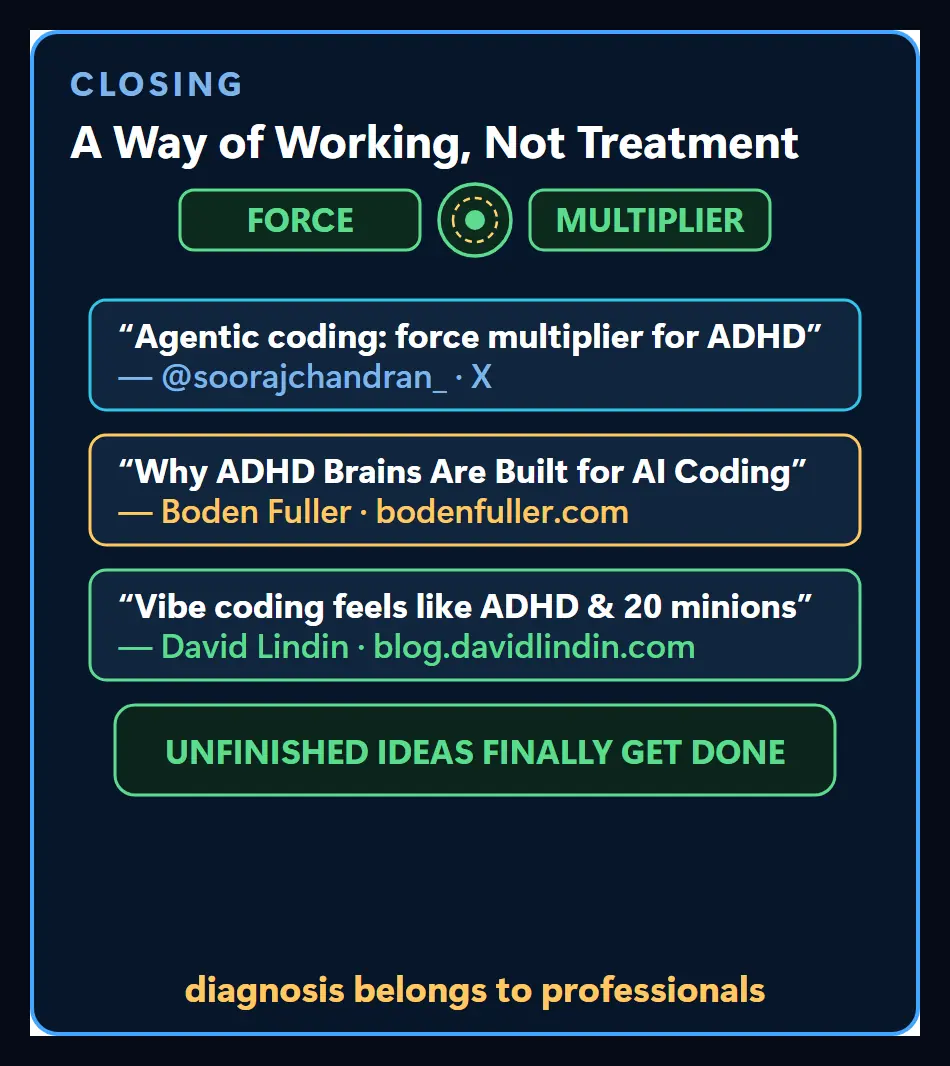
But unfinished ideas have never been this close. If you want to build your own tools with agents, see Custom Tool Development with an AI Agent.
Follow for content about AI
More videos
 Customer Wrote at Night, Request Ready by Morning: A Guesthouse's WhatsApp Night Watch
 Give AI the Address, Not the Route: Why Smart and Simple Models Give the Same Work
 Stop Using Excel and Google Sheets as a Database: From Spreadsheet to Web App
 Can AI Fix Its Own Mistakes? I Checked It Is Not I Fixed It
 OpenRouter and Hugging Face Aren't Models: Three Ways to Reach One
 How Do AI Agents Work? Same Model, Different Results
 AI Agents for AEC Firms: How the Five-Layer Setup Works