
Business Process Automation | Hand Off the Repetitive Work
Every business has something that repeats — data entry, a document waiting for approval, a report built in the same format every time, the same questions answered over and over. This page is about identifying which process is worth automating. If you already know which process you want automated, jump straight to the relevant page below.
Commonly Automated Processes
- Approval workflows — leave, purchase, contract sign-off without paper circling the office: Document Approval and E-Signature Workflow
- Invoice processing — incoming invoices get read and logged into your books: Invoice Processing Automation
- Cash flow visibility — bank transactions in one table: Cash Flow Tracking System
- Booking — a 24/7 assistant that shows open slots and books appointments: AI Appointment Assistant
- Team questions — stop the same question getting asked over and over: Internal Knowledge Base
- Contract tracking — what changed in which contract, compared: Contract Version Comparison
- Web data monitoring — prices, listings, or company info scanned regularly: Web Data Collection
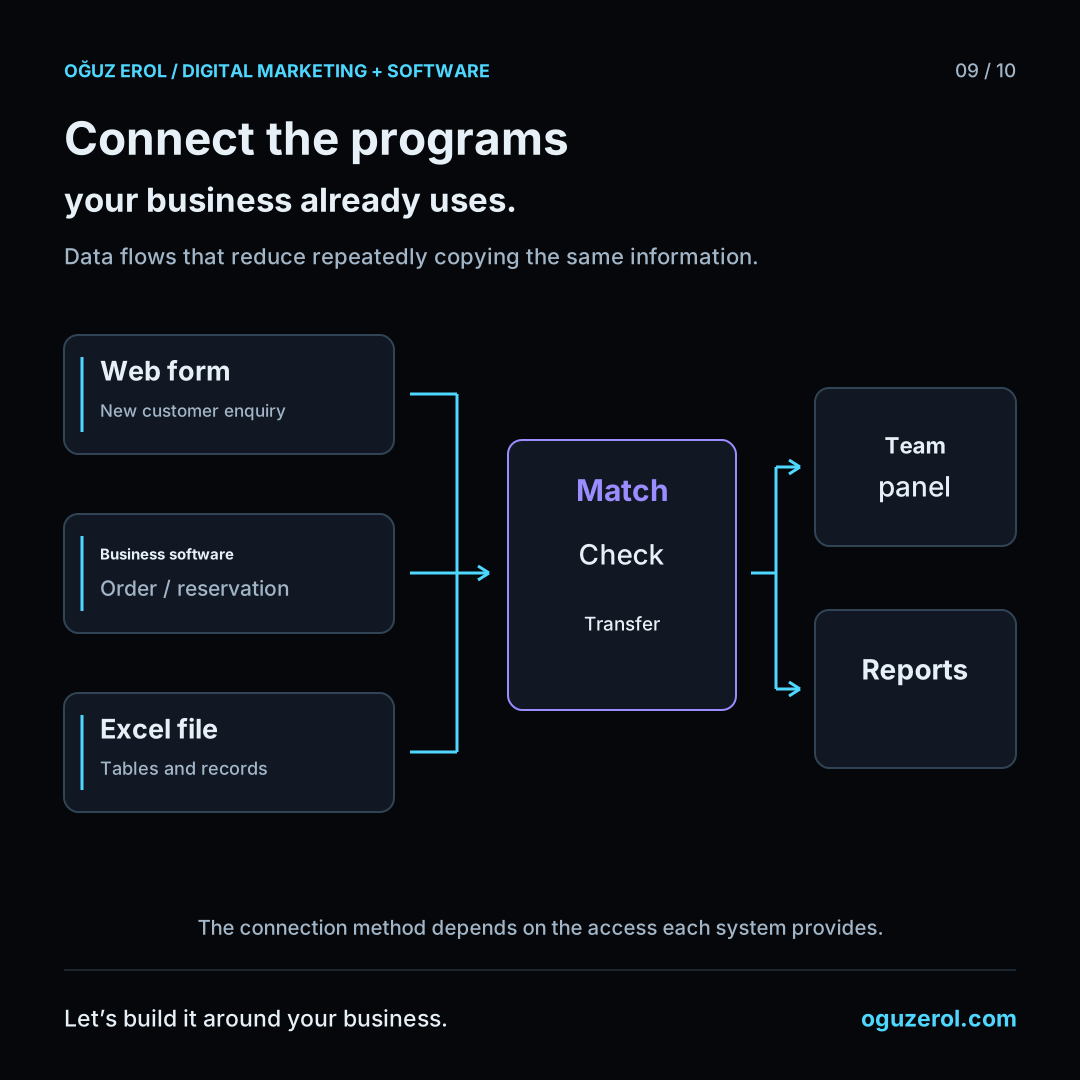
If your process isn’t on this list, write anyway — most repetitive tasks use the same skeleton (data comes in, gets processed, lands with the right person or record), and building something new is common.
How We Find the Right Process
Deciding which process is worth automating matters more than the automation itself. I ask three questions to find out:
- How often does it repeat? Tasks that repeat daily or weekly pay off more than something that happens once a month.
- Is the rule clear? Work that can be described as “if this, do that” can be automated; work that requires different judgment every time cannot.
- What’s the cost of an error? Processes where a small mistake has a large consequence (financial, legal) need a tighter check layer — that adds time, but it can’t be skipped.
The Mistake I See Most Often
Picking the most complicated process for the first automation. The “if we’re doing this, let’s start with the hardest part” reflex comes up in nearly every intro call, and it’s the single most common reason these projects fail. A complex process carries many exceptions, the build drags on, the team sees results late, and the verdict settles in — “this doesn’t work for us.”
I recommend the opposite: start with something boring, repetitive, and low on exceptions. Do the hard one after the team trusts the tool.
What It Does Not Do
- It doesn’t make the decision for you. Automation applies a rule; a person steps in for exceptions that require judgment.
- It isn’t a one-off job. As your process changes, what’s built has to be updated too — an automation set up and forgotten quietly breaks within a few months.
You Can Hire Me for This
You can hire me for this: remote, billed hourly. First we decide together which process is worth automating. Once scope is clear, I give you a price and timeline in writing. Write to me from the contact page.
Frequently Asked Questions
I don’t know which process to automate — can I still reach out?
Yes, that’s the most common way people start. I listen to what you do and we find together where you’re losing the most time.
The process isn’t even written down on paper — is that a problem?
No, we write it down together during the intro call. A process that isn’t written down can’t be automated, but writing it down is part of the job too.
Do multiple processes get automated at once?
Usually not — we start with one process, see the result, then move to the next. That lowers the risk and lets us see what the first automation got right and wrong.
Is automation done once it’s set up?
Setup finishes, but the work doesn’t. As your process changes (a new rule, a new exception) the system needs updating too. You can also take this as an optional monthly maintenance service.