
TikTok Ads Specialist | Next-Gen Customer Acquisition
TikTok’s ad system looks technically similar to Meta’s, but the audience behaves completely differently. People come here to watch content, not to shop — if your ad doesn’t look like content, no matter how well it’s targeted, it gets scrolled past.
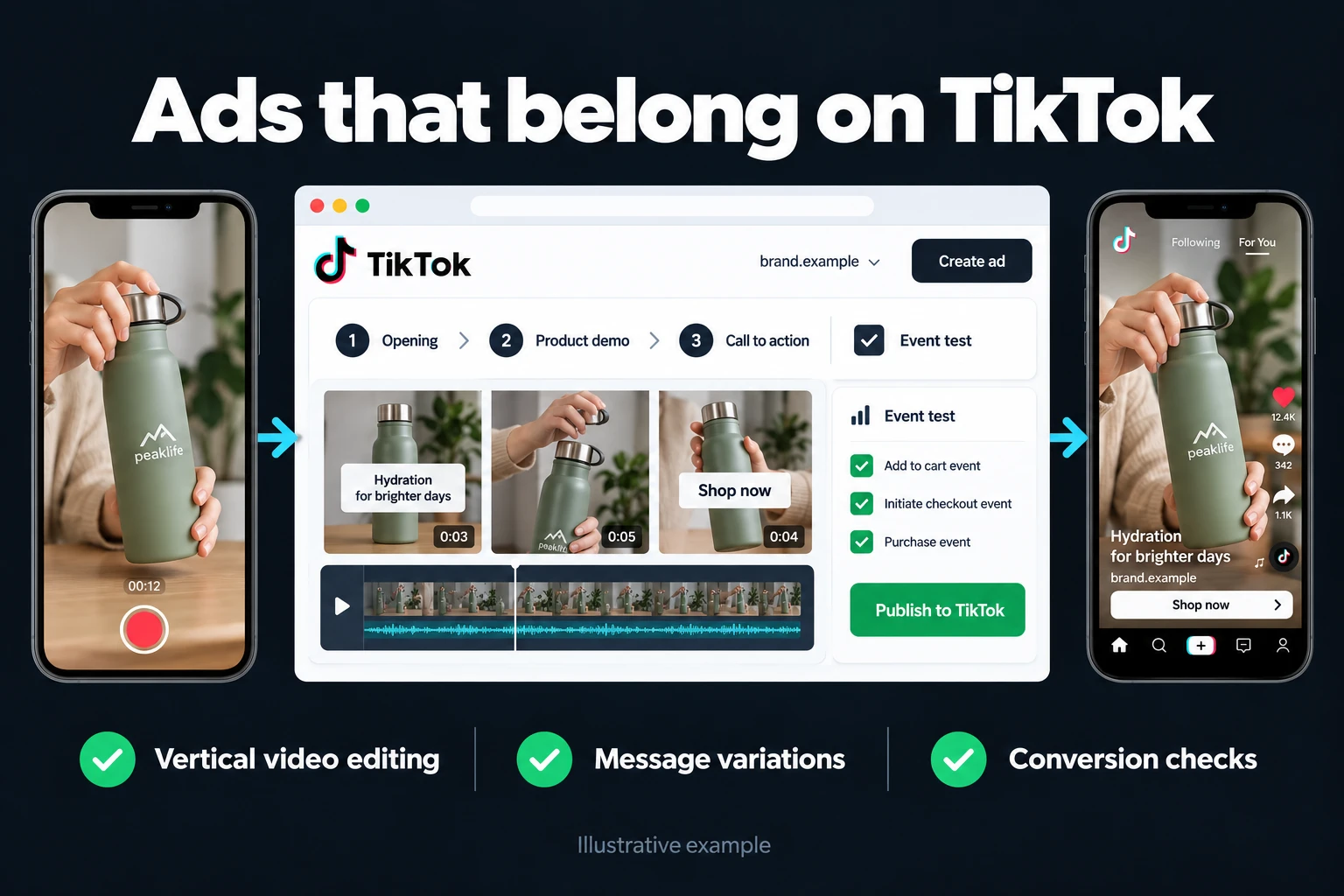
Setting up TikTok Ads Manager isn’t technically different from Meta: pixel, event setup, audience segments — it’s all there. The difference is how much weight the platform puts on creative. Between two campaigns built on the same budget, one can outperform the other three-fold simply because the video is right.
On TikTok, ads shouldn’t look like ads
The platform’s algorithm and user expectations reward content that looks natural and phone-shot over polished, studio-quality ads. That doesn’t mean low production value — it means the right tone.
What I usually recommend during setup is preparing multiple short variants and testing them quickly — rather than chasing one “perfect” ad, seeing early which tone actually lands. Creative fatigue (an ad’s performance dropping fast) hits harder and faster on TikTok than on other platforms.
Audience: not just young people
TikTok isn’t just a young-user platform anymore — the age distribution has widened. But fit between product and message still matters — it’s not the right channel for every sector. B2B and products aimed at an older demographic need careful testing.
In the first call (paid working time), I first talk through whether your product actually suits TikTok. If it doesn’t, I’ll say so — forcing every product onto every platform just wastes budget.
Measurement and setup
TikTok Pixel and Events API setup works on a similar logic to Meta’s Conversions API: browser-side measurement alone isn’t enough, server-side data sharing is needed too. Without this setup, a campaign can look like it’s performing worse than it actually is.
Once setup is done, I verify it with test data before I turn the campaign on. Spending budget before measurement is verified is a real risk.
How do I start? First, I talk through with you what you want and what’s realistic; the first call is paid working time and is deducted from the work-hour block you choose (5, 10, 20 or 40 hours). If it makes sense, we pin down the scope and I get to work. Reach me via the contact page.
Other Social Media Ad Platforms
For a broader or more B2B-weighted audience, see Meta: Facebook Ads, Instagram Ads Expert and LinkedIn Ads Specialist.
Frequently Asked Questions
Does TikTok advertising work for every sector?
No. It works better for products and services that can be shown visually and have some emotional or entertaining angle. For dry, technical B2B services, LinkedIn or search ads are usually more efficient. I assess this with you in the first call (paid working time).
Do I need to prepare the creative myself?
I don’t shoot the video myself, but I direct what needs to be filmed, which format will work, and how the test should be structured. Raw phone-shot footage is usually enough here — studio production isn’t needed.
Is TikTok Shop the same thing as advertising?
No, it’s a separate system. TikTok Shop is an in-platform sales feature; ads are a separate tool that drive traffic to your site or your Shop. The two can work together, but their setups are different — worth not confusing them.
When should I increase my budget?
Once the campaign finishes its learning phase and starts producing steady results. An early, large budget increase can push the algorithm back into relearning mode and temporarily hurt performance. Gradual increases are safer.
How do I work?
Work-hour packages
Tell me about your business and what you need on WhatsApp or by phone; we agree on a work block of somewhere between 5 and 40 hours and I start doing what is needed. What you get is not a calendar window — it is net working hours spent directly on your business. I can use 40 hours working three days straight, or deliberately spread it out and finish it over a year — whatever the work calls for. I do not spend my time estimating how long something will take, I spend it doing the work; every hour I spend leaves a lasting result in your business. We keep going for as long as you find it useful.
Why not monthly?
Is 40 hours a week?
On a fixed monthly fee both sides are watching the wrong thing: you watch a fixed cost, the other side watches how many more contracts like this they can line up. Working by the hour puts us both in front of the same thing — the real value of the work that got done. I know not having an upfront answer to "how much will this cost in total?" is the natural cost of this model. But instead of paying a fixed fee for months to a setup that is not producing results, you only pay for the qualified time spent on your work — and you see exactly where that time went, start to finish. That is why my clients keep coming back.