
Google Ads Consulting
MY REFERENCES
If you don’t want to hand your Google Ads account over to an agency, but you’re not confident managing it entirely on your own either, what you’re looking for is consulting. With an agency, you hand your account to someone else; in consulting, the account stays with you, and I stand alongside you.
I’ve been managing Google Ads for 20 years. Today I do it with AI agents — meaning the hours-long work of reading reports, catching anomalies, cleaning up search term lists, now flows automatically, and I spend my time making decisions instead. That means more of your consulting hours actually go toward talking strategy.
The difference between consulting and agency management
With agency management, your account’s day-to-day operation lives with the agency: they build the campaigns, allocate the budget, write the reports. The upside is you don’t have to deal with any of it. The downside is knowledge never accumulates on your side, and if you leave, you start from zero.
With consulting, full control of the account stays with you. I review the account at set intervals and tell you, with reasoning, what needs to be done — then either we implement it or you do. If you already have someone in-house handling ads, this model is far more efficient — that person develops fast.
What consulting covers
A typical consulting relationship includes: an audit of the account’s current state, restructuring the campaign architecture, verifying conversion tracking, choosing a bid strategy, search term and negative keyword discipline, and feedback on creative and landing pages.
We define the scope in writing upfront. I don’t say “I’ll look at everything” — which topics, at what frequency, with what output, is made clear from the start. That way neither of us sets the wrong expectation.
Who it’s for, and who it isn’t
A good fit: businesses whose monthly ad budget has reached a certain level, and that either have someone in-house handling ads or want to handle it themselves. Not a good fit: situations where literally no one can pay attention and you need someone to simply “take care of it” — that calls for management, not consulting.
If you’re not sure which one you need, we’ll figure it out together on the intro call. Selling you a model that doesn’t fit helps no one.
How do we start? First, a free 20–30 minute intro call. We talk about what you want and what’s realistic. If it makes sense, I send the scope and price in writing, then we start. You can reach me from the contact page.
Service Overview
Google Search Ads
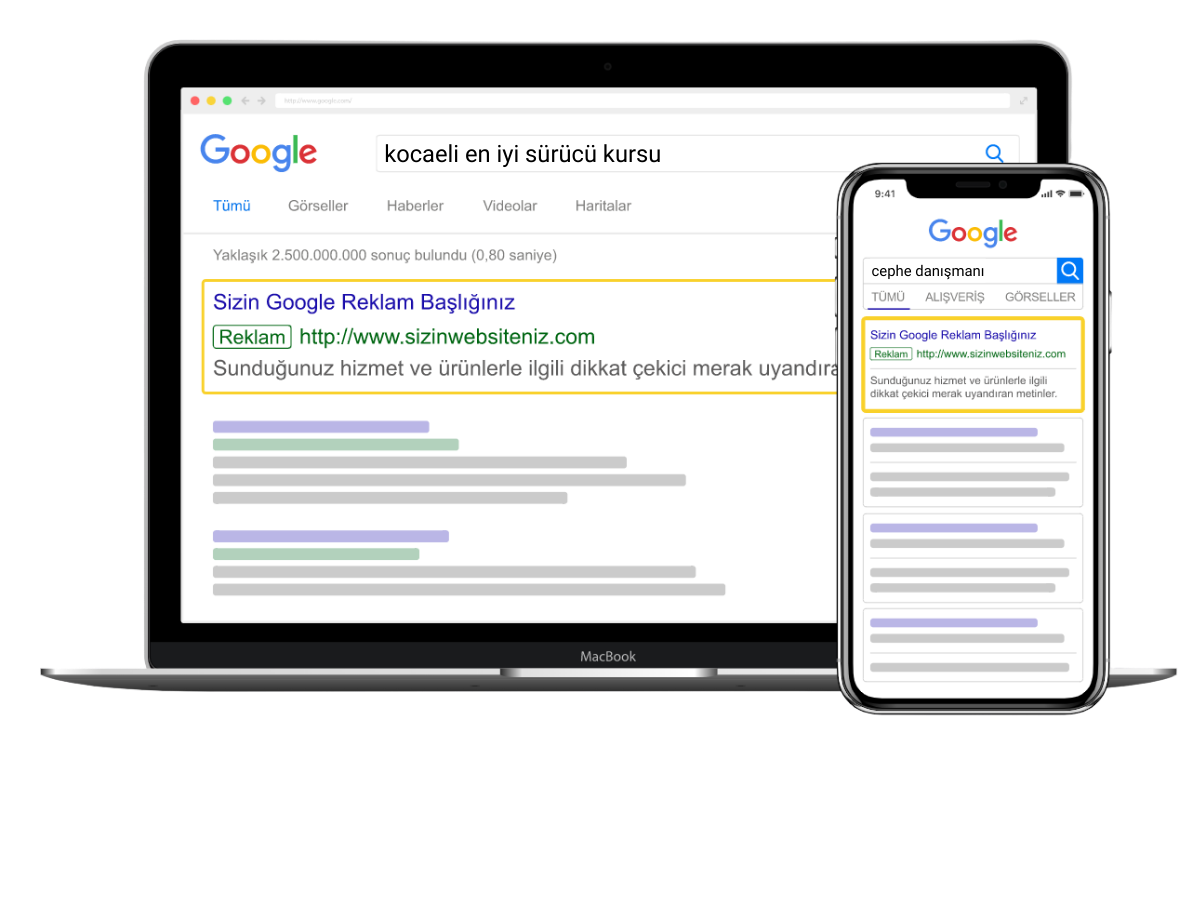
Search ads are the first thing people think of when they hear “Google ads.” Google search ads are the ads you run to appear near the top of the results whenever someone searches a given query on Google.
You decide exactly which keywords trigger your ad, and in which countries and cities. A single click might cost you the equivalent of a few cents, or several dollars. Don’t underestimate the value of working with a Google Ads expert.
As a Google Ads expert, I make sure your budget goes toward the right searches, and I track and grow your conversions. Beyond search ads, you can also show up in local searches with Google Maps ads, reach video viewers with YouTube ads, and appear on content sites through news site ads — all managed from the same Google Ads account.
Google Maps Ads
When you search for a place on Google Maps, the “Sponsored” results that appear at the top are Maps ads. Typically, someone looking for a nearby restaurant, hair salon, auto shop, or local service sees you show up exactly where and when they’re searching — and it compounds when paired with your Google Business Profile. For setup, targeting and measurement details, see the dedicated page: Google Maps Ads.
News Site Ads
Most newspapers, magazines, and popular blogs and news sites run Google AdSense, which connects them to Google’s Display Network. That means we can buy ad space on those sites directly through Google Ads, without negotiating with each site individually.
This lets you place your brand on a news or content site your reader already trusts, right next to the relevant story. I decide which news sites, which categories (finance, sports, tech…), and which audience you show up to through Google Ads — you don’t have to negotiate with individual publishers.
Google Display Ads
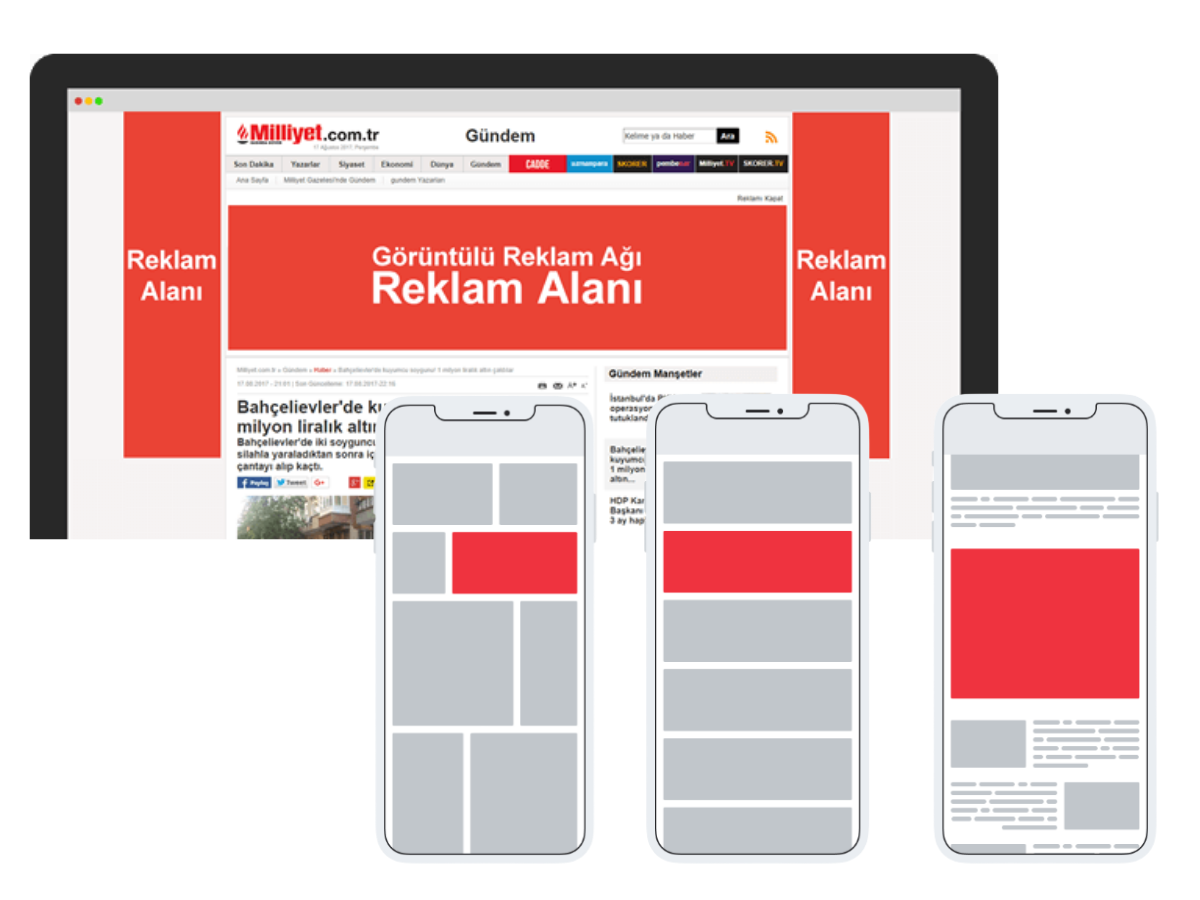
A large share of the ad space you see while browsing any website belongs to Google’s display network — news site ads are part of this same network. If you want, you could start showing ads on a newspaper’s site, a popular dictionary site, or a travel site within two hours.
With search ads, the user’s own search triggers the ad — they’ve already shown intent by searching — so we don’t need to narrow the audience further. With display ads, though, we do need to narrow the targeting to reach relevant people. For example, an ad for a private school needs to reach parents with children of that age. Another approach is to focus not on who we’re showing the ad to, but on which sites we show it on. Or we can show ads only to people who’ve previously visited our website. We can even combine all of these approaches. It’s all possible.
Frequently Asked Questions
Who holds admin access to my ad account under consulting?
You do. You should always be the sole administrator of your ad account — that’s my first piece of advice. I’m added as an authorized user, and you can revoke my access at any time. Your account, your data, and your history all belong to you.
How often do we check in?
Usually one longer call a month, with short exchanges in between. During busier periods — a new campaign launch or the start of a season — we increase the frequency. I don’t impose a fixed pattern; we adjust to the rhythm of the work.
Is consulting cheaper than management?
Consulting is usually more affordable, because implementation time isn’t billed through me. But if there’s no one in-house to implement the recommendations, consulting ends up staying on paper and costs more in the end. Base the decision on who’s going to implement it, not on budget alone.
What if you don’t know my industry?
Over 20 years I’ve worked across everything from hospitality to education, construction to e-commerce. I learn your industry from you in the first two weeks — no one knows your customer better than you do. What I bring isn’t industry knowledge, it’s knowledge of how the ad platform actually behaves.