Source: https://oguzerol.com/en/types-of-ai-agents/ [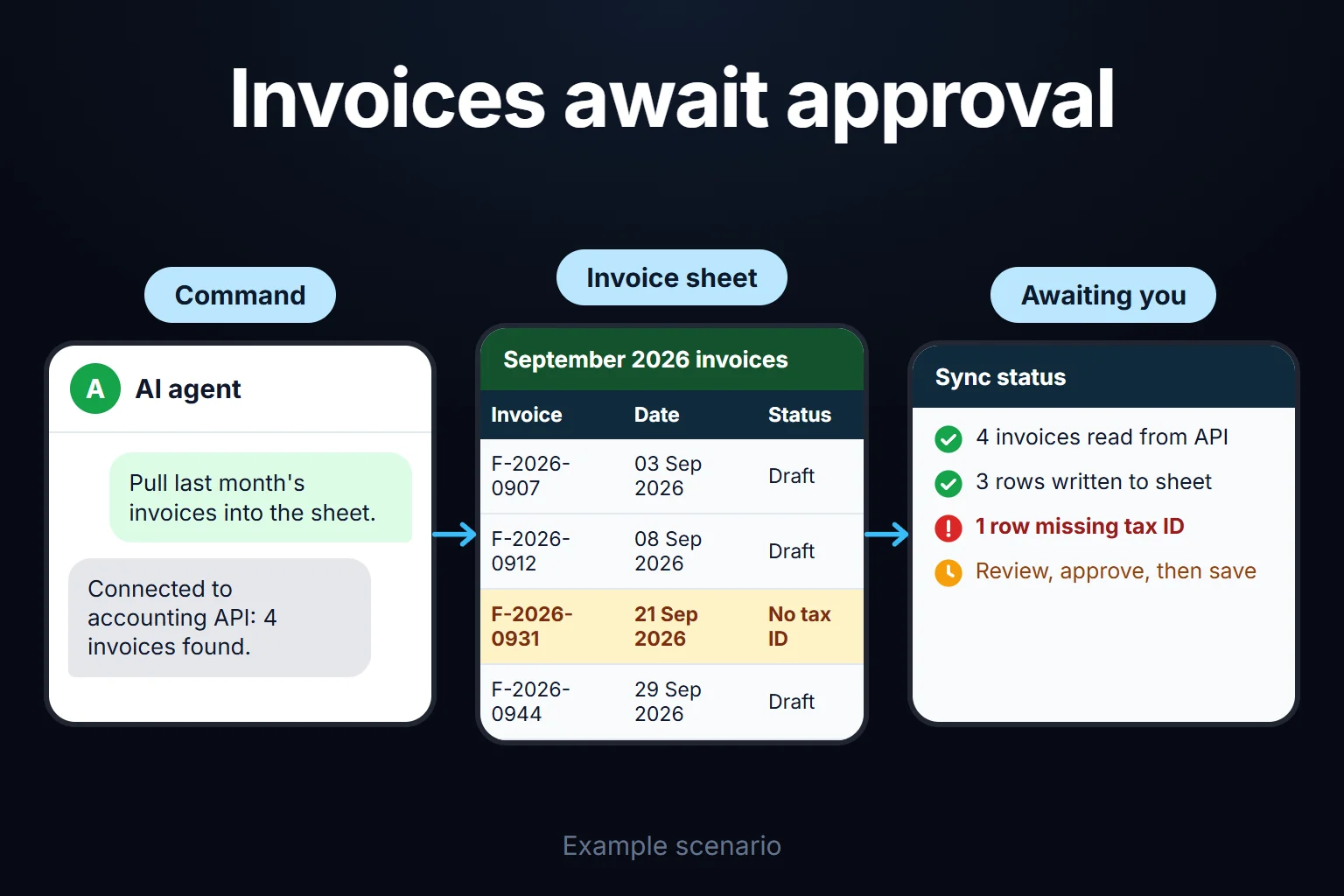 View full size](https://oguzerol.com/gorseller/senaryo/types-of-ai-agents-senaryo-en.webp) # Types of AI Agents: How Many Are There? [Oğuz Erol](https://oguzerol.com/en/about-me/) | 7 min read | Published: 3 August 2026 | Updated: 13 October 2026 ## Quick summary How many types of AI agents are there: reflex, goal-based, multi-agent, tool-using, autonomous. Which fits which job — with a table and real examples. There are 5 main types of AI agents: reflex agents, goal/task-based agents, multi-agent systems, tool-using agents, and autonomous/long-running agents. The difference between them is the level of autonomy — how much the agent can do on its own without human approval. A simple price alert and a monitoring system that runs on its own for days aren’t in the same category — they’re two very different tools. Below I explain each one in plain business language, with real examples. ## What Are the Types of AI Agents? Before diving in, a quick frame: I answered the question [what is an AI agent](https://oguzerol.com/en/what-is-an-ai-agent/) in a separate post — here I’m going into the types. This post is part of the [Agentic AI Guide](https://oguzerol.com/en/agentic-ai-guide/). ### 1. Reflex agent **What it does:** Reacts to whatever’s in front of it, has no memory, doesn’t recall the past. The rule is simple: if X, do Y. **Simple example:** A price-tracking bot that says “email me if this product’s price drops below €50.” On every check it only looks at the current price, it doesn’t care about yesterday’s. **Best suited for:** Single-rule, instant-alert tasks — out-of-stock notifications, sending a message when a certain keyword appears, simple filtering. Cheap, quickly-set-up systems that don’t require complex decision-making. ### 2. Goal-based agent **What it does:** It’s given a goal, plans the steps to reach that goal on its own, and executes them in order. The difference from a reflex agent: no fixed rule — it finds a path based on the goal. **Simple example:** A research agent that, when you say “find and compare the 3 cheapest flight options between New York and Chicago,” searches, filters results, and builds a comparison table. **Best suited for:** One-off but multi-step research, comparison, or data-gathering tasks. Competitor analysis, price research, document scanning. ### 3. Multi-agent system **What it does:** Multiple agents work together in different roles — one researches, one writes, one checks. Each agent specializes in its own task, taking over from the previous one’s output. **Simple example:** A “researcher” agent scans news and developments, an “editor” agent ranks them by importance, and a “writer” agent produces a summary. The three work in sequence to produce a single report. **Best suited for:** Multi-source, multi-step tasks that need quality control — content production pipelines, regular reporting, multi-dimensional analysis. ### 4. Tool-using agent **What it does:** Beyond thinking on its own, it can connect to outside systems — it can search, read files, call an API, update a spreadsheet. **Simple example:** An agent that connects to an accounting program’s API, pulls last month’s invoices, and enters them into a spreadsheet. **Best suited for:** Work that needs to talk to your existing systems (CRM, ad platform, analytics, accounting) — tasks where manually moving data around is exhausting. ### 5. Autonomous/long-running agent **What it does:** Can work on its own for hours, days, even weeks without human intervention. Gets triggered at intervals, evaluates the result, and continues if needed. **Simple example:** A monitoring system that automatically scans industry developments every week and produces a summary, where the human just reads the result. **Best suited for:** Continuous monitoring, regular reporting, daily/weekly scans — tasks where a human doesn’t need to say “run now” each time. ## Agent Types Comparison Table | Type | Autonomy Level | Example Use | | --- | --- | --- | | Reflex agent | Low — no memory, rule-based | Price/stock alert bot | | Goal-based agent | Medium — takes a goal, builds its own steps | One-off research/comparison | | Multi-agent system | Medium-high — roles are shared, they check each other | Content production pipeline, multi-source analysis | | Tool-using agent | Medium-high — connects to outside systems | Report automation, data sync | | Autonomous/long-running agent | High — runs unattended for hours/days | Continuous monitoring, weekly scan systems | ## Managing My Account Portfolio: Two Examples From My Own Operation Let me set theory aside and give two concrete examples from my own work — no names, just method. **Tool-using agent example:** I don’t handle reporting for the ad accounts I manage by checking each panel one by one. An agent connects to the relevant ad platform’s API and pulls performance data, and I read the weekly summary and make the decisions. Instead of logging into panel after panel and copy-pasting, the agent chases the data, and I chase the interpretation. **Multi-agent (and partly autonomous) example:** Once a week I run a system that scans industry developments, picks out the important ones, and turns them into a content suggestion. This isn’t a single agent — one scans, one evaluates, one drafts. I just read the result and approve it or correct it. This is an example of a multi-agent system combined with autonomous operation. The common thread in both: I define what needs to be done and which source is reliable, the agent does the repetitive part. No magic — there’s setup, testing, and correction involved. ## Which Type Is Right for Your Business? A short decision guide: - **If you have a single, simple rule** (like “notify me if this happens”) — a reflex agent is enough, no need to build a complex system. - **If you need a one-off but multi-step research/decision** — a goal-based agent. - **If you have a workflow requiring multiple areas of expertise** (research, write, check) — a multi-agent system. - **If it needs to talk to your existing systems** (CRM, ad account, accounting, analytics) — a tool-using agent. - **If you need continuous, unattended monitoring or regular scanning** — an autonomous/long-running agent. In reality, most work isn’t a pure version of one of these — it’s a combination. Clarifying the difference between an [AI agent and a chatbot](https://oguzerol.com/en/ai-agent-vs-chatbot/) is also a useful step before picking the right type. ## You Can Ask Me to Do This You can ask me to do this work: typically **2 hours to 2 weeks**, done remotely, billed hourly. We’ll decide together which agent type fits your business, and I’ll handle the setup. You can read how I built [your own AI assistant](https://oguzerol.com/en/your-own-ai-assistant/) here. ## Frequently Asked Questions ### What’s the difference between an AI agent and a chatbot? A chatbot writes you an answer; an agent does a task in your place — it searches, pulls data, moves forward step by step. Detailed comparison: [AI Agent vs Chatbot](https://oguzerol.com/en/ai-agent-vs-chatbot/). ### What’s the simplest type of AI agent? The reflex agent. It has no memory, operates on a single rule — for example, sending a notification when a certain condition occurs. ### Is building a multi-agent system expensive? Setup complexity depends on the job, but it’s generally a matter of a few hours. What drives up cost isn’t the number of agents, it’s how precise the decisions need to be and how low the tolerance for error is. ### Can an autonomous agent get out of control? Not if it’s set up correctly. An autonomous agent still operates within the limits you define; human approval can be added separately for critical decisions (like confirming an order, spending money). Autonomy doesn’t mean unlimited. ### Which type of agent makes sense for a small business? Generally starting with a tool-using agent or a goal-based agent is the lowest-risk path. It’s healthier to automate one repetitive task first (reporting, data collection), see the result, and then expand from there. [Back to top ↑](https://oguzerol.com/en/types-of-ai-agents/#icerik) ## You may also find these useful [What Is an AI Agent — With Real ExamplesWhat an AI agent is, how it differs from an assistant, and how it differs from RPA — explained by someone who manages ad accounts with agents, with examples.](https://oguzerol.com/en/what-is-an-ai-agent/)[AI Agent vs Chatbot: The Difference Between 'Answering' and 'Doing'A chatbot answers questions, an AI agent completes the task end-to-end. A comparison table and concrete examples to help you figure out which one you need.](https://oguzerol.com/en/ai-agent-vs-chatbot/)[Agentic AI Guide: AI Agents and Their TypesWhat is an AI agent, how does agentic AI differ, where to start? A non-technical map linking the guides on agents, automation, Claude and MCP in order.](https://oguzerol.com/en/agentic-ai-guide/) [Browse all articles →](https://oguzerol.com/en/articles/)